Friday, March 4, 2016

The Space Where I Currently Stand...

My Statement of Purpose -- Application for PhD Program


Opportunities for online and digital education are vast and continually expanding. This should be a win/win for our students; after all, they now have more variety in course offerings and more freedom to pursue their passions before they graduate high school and enter college or begin careers. And yet—as I watch my students opt out of traditional classrooms in order to take classes online—my heart sinks. One of my senior students, Jill, illustrates the promise and peril of online education. A bright and driven student, she took her junior-level high school English class online last year so that she could be in a business program during the hours that junior English was offered. She was able to take the business courses and get a head start on her future college goals; however, this year, in my Advanced Placement English Literature and Composition class, Jill is struggling. She has said, multiple times, that she “learned nothing” in online English last year. She “doesn’t know how to write.” She “feels so far behind” the other students in the room. She “didn’t have to read a book” during the entirety of her online English class, and she “never got feedback from the instructor.” Jill is right -- she didn’t learn how to become a better writer last year, and she is miles behind her peers this year.

When I was discussing online classes with a colleague during passing time, another student (who also happens to be in my AP class) overheard and blurted out, “online classes are the devil! They’re horrible! I had three last semester and two this semester…I learn nothing, I procrastinate, I get overwhelmed, I do a crappy job on everything. I hate them!”

So, while Michigan’s legislation 21F demands that all students in grades 6-12 are able to take any two classes of their choice online per semester from any education provider they choose, the reality is that students who are taking classes online are struggling. Currently, our district’s pass rate for online courses is 63%. A 2014 study released by the Michigan Virtual Learning Research Institute found a 73% increase in the total number of online course enrollments in the state, but only a 57% pass rate at the time of the study (Watson, 2015).

In our district, in order to compete with the online course offerings, save money, save our own jobs, and raise student engagement, district and building mandates are continually being given by our administration. We have been challenged to “meet the students where they are” and offer them a new, modern format to our traditional seat-time classes. New technologies are presented as “game-changing” -- but the changed game doesn’t seem to be directly benefiting the students. We were encouraged to flip our classrooms as the solution to all of our engagement problems. The subsequent conversations in the teacher’s lounge now included discussions of equity and access for our students…but, ultimately, we had to admit that our students’ levels of engagement didn’t seem to change. Then, “blended learning” was offered as the solution. As more classes moved to a blended format, the workload for teachers increased…but the engagement by students remained stagnant. 

As I watch my colleagues give daily multiple choice formative assessments in order to have data-driven differentiated instruction and provide competency-based education, my heart sinks further. The joy is gone. The student engagement is gone. Teachers, desperate for ideas to pull students back in, try new quiz platforms. They Polleverywhere. They Kahoot. They have data. But are the teaching practices reflective? Are students engaged? And, if students are engaged, is the thinking critical? Life-changing? Are students mastering the content? Can they apply the content to new situations?

I don’t have the answers to these questions. But, I do know that this is the direction of education. And something needs to change. 

And this is why I want to pursue the Doctor of Educational Technology program. 

My professional goals as a high school English Language Arts teacher are, simply put, to continue to reflect and grow as an educator, and to remain a part of the professional learning community in K-12 public education. My passion has always been to provoke students and colleagues and myself to think critically, and to push back at the establishment. Although I have, hopefully, grown more tactful in how I have pushed back over the years, my passion and idealism have not changed. I know that technology is the future and the future is now. But I also know that what we are doing isn’t working. 

So, how do we teach students in meaningful ways that are technology rich? And, how do we avoid the siren song of “cool tools?” How do we engage today’s learners? How do we push back at bad politics and policies in order to create content that will truly provoke critical thinking, content mastery, and social change?

This is the space where I currently stand, and I am excited to be a part of meaningful conversations happening within CMU’s Doctor of Educational Technology program. I want to explore the domain of educational technology from tools and policies to content development and delivery. I want to have the conversations that will lead to stronger educational experiences for me, my peers in the program, and our students. I want to create thought-provoking and effective professional development for our colleagues in education. I want us to figure out how to meet our students where they are, and I want to inspire us—and them—to be game-changers.

Watson, John. "Michigan Study Provides Detailed Online Learning Data; Shows Student Attributes and Growth in Online Enrollments « Uncategorized « Keeping Pace." Keeping Pace with K12 Digital Learning. Keeping Pace with K12 Digital Learning, 23 Mar. 2015. Web. 03 Mar. 2016.

Friday, January 22, 2016

Please Don't Pray For Me

"We'll just have to wait and pray!" she cheerfully responded when I emailed about pending grades.


Pray? About her student's grade? How exactly does that work? I'd like to point out that the (obviously hypothetical) student in question had 19 missing assignments. And the final exam had been completed. I just hadn't managed to grade it yet. So, what was her god doing to do, exactly, in order to answer these prayers? Change the answers on the exam? Change the answer key? Kill me, red pen in hand, before I got a chance to grade the test? Burn down the school? Destroy Pearson and all its grading platform glory? (I might get behind that prayer, actually.)

http://joyfulmindproject.org/wp-content/uploads/2014/08/hands-child-flower.jpgBut wouldn't this god's time be better spent hearing prayers to save the lives of so many homeless children living, impoverished, in Africa?

"Our thoughts and prayers go out to the victims and their families during this time," the politicians and pundits said.


Prayers? For the victims? How does that work, exactly? Aren't they already dead? Or are you going to pray them into some sort of afterlife?

Or are the prayers for the living, the ones left behind after yet another murdering piece of inhumanity armed with a gun and an agenda took the lives of their loved ones? And what will you pray for, exactly? That they find comfort in their loss? That they forgive the unforgivable? That they cast their ballot for you at the next election, even though your policies helped to mold the environment and the individual and arm them with intolerance and rage and weaponry?

"I will pray for your soul, and that you begin to find some peace of mind."


I appreciate this sentiment. Truly, I do. But what I don't appreciate is the implication that my soul and my mind and my peace or lackthereof is worth more than the lives of the starving children fleeing civil wars in Syria. If you want to seek help for my peaceless mind, then please aim those prayers directly at your pocketbook, your borders, your refugee services, and your food banks. If you care anything about my soul, you would understand that it demands more than lipservice. My soul demands real service.

http://www.zastavki.com/pictures/originals/2013/Creative_Wallpaper_Land_of_working_hands_041953_.jpg
Why do we offer prayers? Is it because we have run out of meaningful things to say? Or is it because we are too lazy to do the things we should do, so we repeat these token words and allow ourselves to feel a tiny bit better about our own repetitive inaction and apathy?

If we are going to pray to the gods we believe in, let's pray that we will someday get off our asses and start taking care of each other. Let's pray that we get to work and clean up our families, our homes, our cities, our countries, our world, our planet. Let's pray that we begin to spend more money on water pipes without lead and classrooms without mold and less money on Starbucks. Let's pray that we stop talking and we start doing.

But please, god, please. Let's stop pretending that our prayers are some sort of substitute for decency and sacrifice and hard work and tough choices and active love.

Don't pray for me. Do something about it instead.


Wednesday, December 16, 2015

I might be biased, but...

We are doing our children and our students and ourselves a huge disservice.


Somehow, we have taught ourselves that the news should be presented without bias. Somehow, we have internalized the idea that bias in reporting is wrong. We will gleefully label the “liberal media” or the “conservative think tank” or the “corporate machine” but paradoxically demand that there must be some truly unbiased side to the story. We accept the concept that perception is reality, but yet we hold on to the belief that a “truth” remains, somewhere in the middle of all of the ideology. We insist that “objectivity” is possible.


The unfortunate result is that our media caters to our demands. Talking heads will present dangerous views of the anti-vaxxers next to the medical expertise of the entire pediatric community, as if they both deserve equal airtime. News agencies will validate the voice of the climate change deniers by allowing them talk time right along with the nearly unanimous voice of science. In our “two sides to every story” mythology, we engender the misnomer that there ARE, in fact, two—and only two—sides...


And somehow, we, as a country, have bought into the concept that the law must be objective. We insist that judges and juries and court cases can and should somehow be “unbiased.” We pretend that those interpreting  and applying the law must somehow live in a bubble, free from the influence of anything they might inadvertently see or hear or experience during their entire lifetimes.


In the classroom, somehow, we have taught our students that bias is bad. We teach them that every argument has a counterargument; we insist that they address the counterargument in their writing; we pretend that both sides of every argument should be given equal value and airtime. We demand “objectivity” in their writing and in their sources; we have taught them that what they find online must be “unbiased.”  We insist that information with bias cannot be used when they are researching. In essence, we have told them that bias is bad.


But let’s take a step back for a moment, and consider the ridiculousness of what we are teaching. As an example: if we are asking our students to research child abuse, should they search only for unbiased information? Is there a pro/con site on child abuse? Should they present the counterarguments for rebuttal? If they are to create a meaningful and well-researched piece on child abuse, should this be done without bias?


Here’s the thing: bias just IS. It’s not good. It’s not bad. It just IS. And there is no way for us to be “unbiased” or for a jury to be without bias, or for a textbook or a piece of canonical literature or an informational text or a journalist’s article about an event to be written without bias. We are all biased in every single aspect of our lives. Our biases are the lenses through which we view the world. Our upbringing, our peers, our religious, social, and cultural beliefs, our race, our gender, our age, our socio-economic status, our nationalism, and the micro-aggressions we experience and we internalize...these are our lenses of bias through which we view the world. We cannot escape our biases.


But we CAN be aware of them, and we can be highly cognizant of our worldviews and of the sources we find that corroborate our worldviews. And we MUST be aware of the biases that exist in all aspects of our lives. Instead of fruitlessly searching for “unbiased information,” we must unpack the biases of the information we find, measure that information against our understanding of the world, and use that information to broaden our horizons.

We are doing our children and our students and ourselves a disservice if we continue to pretend that information without bias exists. We need to stop deceiving ourselves with the belief that every argument has a counterargument that is equally valid. We need to stop giving airtime to “the other side” so that we can feel good about our own research and journalism and present ourselves as “fair and balanced.” Our biases are what make us uniquely us; it is only in recognizing our own biases and challenging them, and simultaneously recognizing the biases in others, that we can begin to have intelligent and informed conversations about our world.


Thursday, October 29, 2015

Liar, Liar


(Reading Logs on Fire)


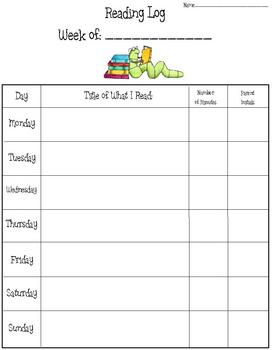
If I had a penny for every reading log entry I’ve lied on so far in my children’s elementary school career, I’d be able to pay for their first semester of books in college.


Okay, obviously, I exaggerate. I also do the common core math homework with my kids, so I can estimate in my head. I’d probably only be able to buy a Little Caesar’s HOT-N-READY Pizza.


But I stand by the premise of my point. I lie. On reading logs. A Lot.


And, from a recent Facebook conversation I had with friends, so does everyone else.


These friends were not education-hating non-reading conspiracy-theory moms, mind you. There were more MA’s and Ph.D.’s in that group than I could common core estimate. Most of the commenters work in education. And almost all of us lie on reading logs. All. The. Time.

Why? We are all avid readers. We all believe in the power of reading.


We’ve all seen the handouts. The charts. The memes. If our kids don’t read 20 min a day, every day, they will become education-hating non-reading conspiracy-theory adults. 

The risk is huge. We must incentivize. This reading must happen. And reading logs are an easy way to keep kids and parents on track.


Parents just need to step up and be responsible. At the end of the day, that's the message.


Disclaimer: I’m a teacher. And I don’t believe in homework. I never assign it to underclassmen on purpose. Only my AP seniors get homework, and it is always specifically designed after the college model. I have spoken with many other teachers who don’t believe in homework. But I can't get past the conversations I have had with educators I highly respect. One of them, a high school teacher who formerly taught second grade, said, “I never assigned homework in second grade. Except for 20 min a day of reading. And math facts.” The other educators in my family fundamentally believe in the importance of 20 min of reading a day...and math facts.


<Oh, the math facts. So many problems a day. Worksheet after worksheet. So many tears. So little time.>

When I’ve talked with my kids’ teachers, the reasons have been varied, but the results are the same. 

“It’s a grade-level decision.”

“It’s a district decision.”

“If kids don’t read 20 min a day, they will fall behind.” 

“It’s an incentive for non-readers, and no big deal for avid readers.”


BUT let's STOP for a moment. Let's be honest, here.


We’re ALL LYING. All of us parents. We are liars on the reading log. Maybe we just fudge the numbers. Or make up the titles. Or spread one marathon reading session over several log entries. Day after day, week after week. The reasons and methods are varied, but the results are the same. Everybody does it and everybody knows it.


My daughter reads every night in bed. I know she’s reading. Sometimes she reads for 10 minutes. Sometimes she reads for an hour. She reads books aloud to her brother and me in the car. She reads magazines in the bathtub. She reads the Comcast Ondemand screens as she searches for new Teen Titans Go! episodes. Her bedroom has one clear path from the doorway to her bed and the dresser. And it is lined with books. There are books on her bed, in her bed, under her bed, next to her bed.


But I don’t know every title of what she reads every day and how many minutes she reads each of them. Frankly, I don’t care. She reads. And so I scrawl something on the reading log every day so she doesn’t have to stay inside at recess. “It’s okay, mom, I didn’t mind losing Friday recess for not having my reading log done. I got to stay in and read,” she said.


I know that we could set up a plan, read on the commute to and from school, practice our math facts together, and be done with it all before we walk in the door. But car rides are when we get to examine the merits of Taylor Swift lyrics, discuss the implications of Hillary Clinton and Donald Trump, and analyze the finer points of secondary Marvel characters. Car rides are also where we discuss the Pledge of Allegiance, what we should say to our friends when they insist that “Let it Go” is a terrible song, and how people can know for sure if they’re gay or straight. I gotta tell you, I’m not substituting our car conversations for homework.


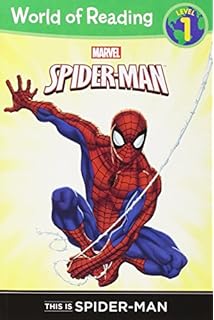
My son, who has not yet received his first reading log, considers himself a non-reader. He is reading at grade level, but he is not reading-confident. Unlike his older sister, he is driven to do his homework and do it right. “Call the teacher,” he’ll sob. “There’s a word missing on the spelling list and the test is tomorrow. Call the teacher!” Maybe reading logs will be an incentive for him. I imagine it will be easy to fill out the reading logs for him when they start to arrive. Every level 1 reader we read takes at least 30 minutes to get through. We stop on every page, as he explains the plot inconsistencies and the missing information on Peter Parker’s transformation. He is frustrated that these books don’t get the stories right: "The Hulk and Iron Man were not on the same team in that story, mom. The book is wrong." When the reading logs begin to arrive, I know that if I can just remember to write down the title of the book and the number of minutes and sign in the little box, I can conquer this windmill.


But I know what will happen. I will come downstairs after tucking him in, and I’ll check Facebook and I’ll make lunches and I’ll fold laundry and I’ll do the dishes and three days later I’ll remember the reading log on the fridge, buried underneath the latest spelling test. I’ll make up book titles. I’ll randomly decide that some days we read for 30 min, and Friday night we only read for 10, because that looks more believable. I’ll sign my name and tally the numbers in my head with my common core math skills and I’ll put the log in the homework folder.


Another reading log finished and turned in. Success.


Thursday, June 18, 2015

Public Confessions


I have a confession to make.


I have been pretending to be something I am not.

I am not a Ginger.

I have been passing as a Ginger for 20 years; I have identified as a Ginger for 30 years. But I have learned over the past week that we must all confess publicly to the passing that we do. And so, here I am, a dishwater-brown-slightly-greying-haired woman, confessing that I have dyed my hair various colors of red over the past 20 years. Right now, my hair is l’Oréal Féria R57. But my roots, which I have learned must be made public at all times, are the color of "meh."

In fact, I was born blonde. Well, no, that’s not true. I was born bald. But when I was two years old, I had wispy blonde hair and green eyes. And then, when I hit puberty, my hair darkened and actually was red for a while. Or maybe there was just a lot of rust in our well during those years. In high school, I passed as having long spiraled curly hair, but I must confess now, in the spirit of public confessions, that I had a perm.

But I never felt like a blonde. I didn’t feel like a blonde when I was 6, when blonde meant Brady Bunch, and I didn’t feel like a blonde when I was 13 and my hair turned temporarily reddish. I most definitely didn’t feel like a blonde when I was 19, and blonde meant “girl next door” sorority pretty. I had very pale, freckled skin, that didn’t really tan as much as it burned; in the winter, I could get so pale I looked perpetually tired and sick; I definitely didn’t fit the definition of "blonde" in the blonde jokes. I felt like a Ginger. I identified as a Ginger. And so, I became one.

Now, I know that this was unfair of me, to take on the culture of the Ginger without having been relentlessly teased and kicked as a child. I could have lived my entire life as a "Meh"formerlyblonde, and I could have done just as much good in the world as my true self instead of pretending to be something I was not. And, once I decided to live as a Ginger, I should have revealed my true identity to everyone I met, instead of allowing them to assume that I was a real Ginger. I should have revealed my roots, instead of hiding behind the façade of Gingerhood. Although any true Ginger could take one look at me and know I’m not a real Ginger, many people have complimented my “beautiful, unique hair color” over the years; they’ve tagged me in Ginger-themed memes; they’ve asked me how many souls I’ve eaten.

If, hypothetically, there was an organization in my city that worked to advance the fair treatment of Gingers, and I applied for a job there, should I have to reveal that I am not a “real” Ginger? If I get kicked on Kick a Ginger Day, is the kicking less real because I am not a real Ginger? (Now, of course, if I kicked myself on Kick a Ginger Day but then pretended that someone else kicked me, that would be pretty sad. I should be reprimanded for falsifying said Ginger-kicking reports. I should also maybe find a therapist. But should I be dragged onto a national stage at this point?) Is the work that I’ve done for the Ginger Rights Advocacy Group any less valid because I have roots of a different color? If GRAG didn’t straight out ask me if I was a REAL Ginger, do I have a responsibility to reveal my ungingerness? If I am hired by GRAG as a Ginger, is it blonde privilege if I’ve presented as a Ginger the entire time and earned my GRAG position as a Ginger? If I am not required by law to check the “used to be a blonde girl” box, should I still check the box, just in case? Am I lying if I don’t check the box?

Which brings me to another confession that I have to make. There is another lie I’ve told by omission. To my boyfriend’s high school friends at the wedding last summer: I should have confessed while we were shaking hands that I was wearing Spanks. I am not, in fact, the slightly more toned slightly thinner person you met. My real ass jiggles all over the place when I walk. But I didn’t feel like an ass-jiggly mom-tummy woman that night; I felt like all my parts were just a bit more toned. However, it was wrong of me to allow my desire to be perceived as thin to trump my DNA. In fact, as I have recently been informed, denying my DNA and trying to be something I’m not is giving in to original sin. I was naive and vain and did not realize that my wearing of Spanks and my non-reveal of my Spanks wearing was in the original sin category; I guess I should confess to trying to present myself as someone I was not at that wedding.

Which, sadly, brings me to another confession I must make. To the lady at the golf clinic yesterday who said that she was much closer to retirement than I was, I must reveal that I am actually over the hill. I didn’t correct her belief that I was younger; it seemed a bit weird, honestly, to say that to a stranger. “No, I’m just as old as you are.” I felt like that could be taken so many different ways, and we had only just met. But I clearly should have said, on introduction, “Hi, my name is Sharon, and I am 42. I color my hair and wear sunscreen a lot.”

Which brings me full circle back to my 30-year identification as a Ginger. You see, I just feel more accepted by the Gingers; their liberal use of sunscreen makes sense to my worldview; their transparent skin in January speaks to my soul. With the Gingers, I feel like I belong, like I have a place in the world, like I can truly make a difference.

I know that many of you are arguing that race and Gingerhood are not in the same category. Believe me, I do not mean to imply that the atrocities committed towards those of various races by those in power are in anyway comparable to Ginger-kicking. And I am not implying that a person's DNA is irrelevant to their identity. But race is a social construct. It’s a made-up thing. Race is something that was created and defined by those in power so that they could separate out those whom they wanted to control. And so, arguing about a person’s race or their need to reveal their race upon entering a room is as ridiculous as arguing about whether or not Gingers really do eat people’s souls.

Our need to publicly crucify a woman because we do not agree with or understand her life choices seems cruel and inhumane. We don’t have to agree with anything that Rachel Dolezal has done in her life; luckily, that is her life and not ours. We’ve been busy making our own mistakes. (I had very short, straight, highlighted hair for about 6 unfortunate months.) If she chose not to reveal her parentage or embrace her race, what business is that of ours? If she broke the law, then the law can and should act. If she took a job that she did not rightfully earn, then she should be fired. But no matter what she has done, or not done, or revealed, or not revealed in her life, she is still a woman: a mother with two children, a sister with four siblings, a teacher, a public servant, a human being. We don’t have to choose to understand her choices, and we don't have to accept them. But we can choose to understand what it is like to want to find a place where we belong, and to want to feel confident and comfortable in our own skin. We don't have to condone her actions. But we can be kind.

We can choose how to treat people. We can choose how to conduct ourselves in this world.

And now, if you’ll excuse me, I need to go color my hair. My roots are beginning to show.

Sunday, April 19, 2015

Socrates in a Snapchat World

“We model an inquiring, probing mind by continually probing into the subject with questions.” (1)

In a perfect classroom with perfect students in a perfect world with a perfect teacher, Socratic Teaching is the perfect pedagogy. Teaching critical thinking through asking guided questions moves the teacher to the facilitator chair and puts the onus of thought and inquiry on the students. The Center for Educational Leadership’s “5D+ Self-Assessment and Professional Development Plan” insists that, in order for a teacher to be “distinguished” (which aligns with “highly effective”), they must do 40+ things, including the following 8:
  • The success criteria for the learning target(s) are clear to students. The performance tasks align to the success criteria.  Students refer to success criteria and use them for improvement.
  • Teacher sets expectation and provides support for a variety of engagement strategies and structures that facilitate participation and meaning making by students. All students have the opportunity to engage in quality talk. Routines are often student-led.
  • Teacher provides scaffolds and structures that are clearly related to and support the development of the targeted concepts and/or skills.  Students use scaffolds across tasks with similar demands.
  • Teacher consistently uses strategies for the purpose of gradually releasing responsibility to students to promote learning and independence.  Students expect to be self-reliant.
  • Students consistently assess their own learning in relation to the success criteria and can determine where they are in connection to the learning target.
  • Students consistently use assessment data to assess their own learning, determine learning goals and monitor progress over time.
  • Routines for discussion and collaborative work have been explicitly taught, are evident, and result in effective discourse related to the lesson purpose. Students independently use the routines during the lesson. Students are held accountable for their work, take ownership for their learning and support the learning of others.
  • All available time is maximized in service of learning. Transitions are student-managed, efficient, and maximize instructional time. (2)

These 8 items on the rubric require the students to: lead the class, monitor themselves, assess their own progress, set their own goals, and “take ownership for their learning and support the learning of others.” And herein lies part of the problem with this specific teacher evaluation rubric; it's also part of the problem with Socratic teaching: it asks the students to do things that students (and most adults) aren’t really that interested in doing. Let’s face it: we want to find the shortest, fastest path to the correct answer, so that we can get back to our lives. LOLcats are decidedly more fun than formulating answers to guiding questions; in a Snapchat world, we want to find and send the right answer in 6 seconds or less.

My research project is fundamentally based on Socratic Teaching. Instead of giving students a checklist of criteria that their sources must pass in order to be deemed “good,” I am asking them guiding questions, and demanding that they think critically about the information and formulate their own guidelines to determine source reliability. Right now, my students are crashing and burning. They treat the Internet like a scavenger hunt: click quickly, skim for information, copy it down, move on to the next question. I am fundamentally challenging the way they do research on the Internet (and maybe even the way they do school), and they are frustrated by the lack of “answers” that they find.

A 2011 study(3) in which a Socratic lesson was re-enacted with modern students found that students “gave answers astonishingly similar to those offered by Socrates’ pupil”(4); however, more than half of the contemporary subjects failed to understand the importance of the questions themselves. This study raises questions about the Socratic method and students today. In a world that moves as quickly as ours, where the right answer is the celebrated one, and the bubble sheet is the final dictate of success, is Socratic teaching even truly possible? Can students truly learn critical thinking by being presented guided questions, and is that method truly valuable to them and to their lives?

I would answer, resoundingly... “maybe?” 


__________________________________________________________________

(1) Foundation for Critical Thinking. “Socratic Teaching,” 2013. Online. Internet. 19 Apr. 2015. . Available: http://www.criticalthinking.org/pages/socratic-teaching/606.

(2) “5D+ Teacher Evaluation Rubric,” n.d. Online. Internet. 19 Apr. 2015. . Available: http://info.k-12leadership.org/5d-teacher-evaluation-rubric.

(3)  Goldin, A. P., Pezzatti, L., Battro, A. M. and Sigman, M. (2011), From Ancient Greece to Modern Education: Universality and Lack of Generalization of the Socratic Dialogue. Mind, Brain, and Education, 5: 180–185. doi: 10.1111/j.1751-228X.2011.01126.x.

(4) Paul, Annie Murphy. “Why Asking Questions Might Not Be the Best Way to Teach.” Time, n.d. Online. Internet. 19 Apr. 2015. . Available: http://ideas.time.com/2011/12/14/why-asking-questions-might-not-be-the-best-way-to-teach/

“research cat says Wikipedia not acceptable source - Cheezburger,” n.d. Online. Internet. 19 Apr. 2015. . Available: http://cheezburger.com/1959160576.
 

Enmeshed in a World Wide Web of Frightening Metaphors

“Can you trust everything you read on the Internet? Can you trust anything you read on the Internet? Teach your kids which Web sites to trust!”(1)
 The sub-headline on Education World’s lesson plan page for teaching web literacy shouts at us with bold and italics. The subtext is clear: the Internet is a place you cannot trust. Education World goes on to list the possible authors of web pages, including “any ignoramus -- or satirist or bigot or fool with an ax to grind” and presents the scary question: “how do kids distinguish between The WhiteHouse.org (a site you definitely don't want to show your students) and The WhiteHouse.gov?” [For those not in the know, WhiteHouse.org is a political satire site, mostly mocking George W. Bush and many policies from his tenure as president, but has also had adult humor and adult content links from time to time; it includes the hilarious and inappropriate “White House for Kids” page of links on fun tobacco safety, how to deal with stupid policemen, and abstinence (how to keep it in your pants). This site is not to be confused with WhiteHouse.com, which was a porn site for years, before it turned into a list of dating site links and now seems to be mostly defunct.]
This positioning of the Internet as a place full of ax-grinding predators lying in wait to trap children into smoking cigarettes and running from the police is not limited only to poorly constructed arguments complete with bandwagoning and a lack of concrete evidence by sites such as Education World, who claims “The words you are reading now have been read -- and reread -- by several experienced editors and educators. They are words you can trust -- posted at a site you can trust”; this us-versus-the-monster language is a consistent feature of the media literacy discussion.


 The European Association for Viewers Interests (EAVI) video series (2) on media literacy for children (written by Paolo Celot and Susie Jones) features Jack, a small boy in a rowboat navigating an ocean. On his journey through the waters of the Internet, Jack sees a submarine spying on him, sharks circling his rowboat, an armada of pirates meant to represent advertising, and a single octopus’ tentacle that suddenly rears up out of the water, towering over Jack, meant to represent false advertising and the hidden danger trying to pull Jack under or capsize his rowboat at any time. Lurking under the surface of the water, there is a submarine with a bomb, more sharks, and some sort of big-toothed piranha-like fish, representing google searches. The narrator of the video points out that Jack must be “armed with critical thought,” a metaphor that escalates the dangers lying in wait to attack Jack to that of a war, in which he needs weapons. In episode 2 of the video series, Jack lands on an island, and promptly “gives away his power” and “allows the media to distract him”; the viewer watches a scary cartoon of Jack in his boat getting dragged all over the place in the ocean by a submerged arm. Lux, the aptly named guide for Jack, appears and tells Jack he must “nurture the seed of awareness in [his] belly” so that it can grow into an awareness tree. Jack then climbs his tree of awareness and texts his friends, sadly circling the base of the tree down in the darkness of the forest, so that they can ask themselves “What am I doing? Where am I going?” and find their own awareness tree to climb and giant bird to ride through the sunny air of the Internet.

The metaphorical world of the media that Andrea Quijada constructs (3) is no more mature and no less frightening than the world of ignoramuses, satirists, bigots, and fools with axes to grind, or the world full of circling sharks, tentacles, submarines, and pirates, all wanting to ambush or capsize Jack in his rowboat. Quijada’s world presents an Internet full of subtext and untold stories; her media literacy students are on a quest to deconstruct the media; they need magical “accessories” in their toolbelts. She likens the media-literate student to Wonder Woman with a “golden lasso”; her students, when finished with the media literacy unit she teaches, have “gained a superpower.” Her prevalent example of media manipulation and the deconstruction of the message is an ad by a credit card company that her winning student deconstructed and reconstructed, to show the “corporate manipulation and slavery” that the subtext of the ad was selling.

These scary metaphors are doing more harm than good. Media literacy skills are critical, and teaching students (and ourselves) to be critical thinkers is incredibly important...but not because the sharks are grinding their axes and we can only survive by using our golden lasso to avoid smoking the abstinence cigarettes of corporate manipulation and slavery. We should teach students to use critical thinking because that’s what educated people do. If we approach the Internet tentatively out of fear, waiting to see what lurks around the corner to pounce, we risk missing the chance to be on a level playing field, participating as savvy consumers, creative inventors, and eager explorers.

If there is a war to be fought, it should be with our own fear; our students should be armed against ignorance, assumptions, and malevolence in all aspects of their world...and mind. 


 _____________________________________________________________________
(1) Education World. “*I Read It on the Internet: Teaching About Web Literacy,” 13 Jan. 2015. Online. Internet. 22 Mar. 2015. . Available: http://www.educationworld.com/a_lesson/lesson230.shtml.

(2)  Media Literacy Concepts and Metaphors: Critical Thinking, 2013. Online. Internet. 19 Apr. 2015. . Available: https://www.youtube.com/watch?v=BYKnfuFZ1pA&feature=youtube_gdata_player.

(3) Creating critical thinkers through media literacy: Andrea Quijada at TEDxABQED, 2013. Online. Internet. 19 Apr. 2015. . Available: https://www.youtube.com/watch?v=aHAApvHZ6XE&feature=youtube_gdata_player.
 
 All images licensed through Creative Commons for public use.